In this article....
How much does mastic sealing cost? A UK price guide for 2026 – 2027
Resealing a single bath or shower tray usually costs between £50 and £110, depending on where you live and whether VAT is included. A full bathroom costs more, typically a few hundred pounds. But the price only tells half the story. Who does the work, how well they prepare the joint and which sealant they use decide whether it lasts one year or ten.
Nobody likes calling a tradesperson without a clue what it’ll cost. So here’s a straight answer.
Below, you’ll find typical UK prices for the most common sealant jobs. Just as importantly, you’ll see why a plumber, a handyman and a sealant specialist can quote very different prices for the same bath, and what you’re actually paying for. Prices vary around the country, but this should give you a solid starting point.
UK price guide 2026 – 2027
How much does mastic sealing cost?
Typical UK guide price for common sealant jobs
| Job | Typical UK guide price |
|---|---|
| Reseal a bath | From £80 to £120+ |
| Reseal a shower tray | From £80 to £120+ |
| Shower enclosure, alongside a tray reseal | Around £30 extra |
| Reseal a sink or basin | From £50 to £100+ |
| Reseal a whole bathroom (bath, shower, basin, toilet) | From £200 to £300+ |
| Kitchen worktops and floors | Roughly £7.50 – £12.50 per metre, with a minimum charge |
| Window and door mastic | Quoted per window or per metre |
| Commercial and new-build joints | Quoted per metre or per project |
The higher end of each range usually means London, a larger job, or a price that includes VAT. Many firms set a minimum charge, so small jobs can cost proportionally more.
At ROSEAL, every job is quoted individually. Send us a few photos or a quick walk-through video on your phone, or we can visit. Like most specialists, we have a minimum visit charge, which covers travel and set-up however small the job.
Plumber, handyman or sealant specialist? Why prices differ
Before you compare prices, it’s worth comparing who’s doing the work. Three very different people might quote for the same bath.
A plumber might reseal while they’re fixing a tap. A handyman might add it to a list of small jobs. A sealant specialist, often called a mastic man, does nothing else, every working day.
Many plumbers and handymen do a perfectly decent job. But sealant is a sideline for them, so it tends to get sideline time and sideline products. For a specialist, the finish is the whole job. That difference shows up in three places: preparation, products and workmanship.
| Plumber or handyman (typical) | Sealant specialist (typical) | |
|---|---|---|
| Main trade | Plumbing, odd jobs or general repairs | Sealant only |
| Old sealant | Sometimes cut back, sometimes sealed over | Removed completely, every time |
| Preparation | A quick wipe and dry | Mould treated, surfaces degreased and fully dried |
| Products | General-purpose or trade-counter silicone | Professional-grade sealant chosen for each joint |
| Finish | Varies with the person and the time allowed | Consistent, crisp lines, tooled to a set profile |
| Typical lifespan | Months to a few years | Several years, often more |
| Price | Often lower | Usually a little higher |
This is a general picture, not a rule. There are excellent plumbers and careless specialists. The point is to ask the right questions, whoever you choose.
What proper preparation looks like
Most sealant fails because of what happened before the new bead went on. A thorough reseal looks something like this:
- Cut out every trace of old sealant. Blade first, then a remover for the thin film left behind. New silicone won’t bond to old silicone.
- Treat any mould. Spores left in the joint will simply grow back through the new sealant.
- Degrease the surfaces. Soap scum and body oils stop silicone sticking properly, so the joint is cleaned with a solvent.
- Dry it completely. Even a little moisture weakens the bond. This step can’t be rushed.
- Fill the bath before sealing. The weight of water lowers the bath slightly, so the joint isn’t stretched and torn the first time someone gets in.
- Mask where needed, then apply and tool the bead. One smooth, even run, shaped to shed water rather than trap it.
- Leave it to cure. Usually 24 hours before the bath or shower is used.
When a quote looks surprisingly cheap, it’s usually steps 1 to 5 that are being skipped.
Why the product matters
Not all silicone is equal. Cheap general-purpose tubes can look fine on day one, then discolour, shrink or lose their grip within months.
Professional-grade sanitary sealants contain stronger mould inhibitors, cope better with movement and stick more reliably to tiles, acrylic and stone. Specialists also choose the right type for each joint: neutral-cure for natural stone, hygienic grades for kitchens, colour-matched sealant where the finish is on show.
The difference in material cost is small, often just a few pounds per job. The difference in how long the joint lasts is not.
The cheapest quote isn’t always the cheapest job
Here’s a simple example. Say one reseal costs £60 but starts peeling within a year. Another costs £100, but it’s properly prepared and lasts five years or more.
Over five years, the “cheap” option could mean four or five call-outs, plus the risk of water getting behind the tiles in between. The dearer quote turns out to be the better deal by some distance.
So when you compare prices, compare what’s included. A slightly higher price for full removal, proper preparation and quality products is usually money well spent.
What affects the price?
Two jobs that look the same can be priced quite differently. Here’s why.
How much old sealant has to come out. This is the big one. Stripping out old, mouldy silicone properly takes longer than applying the new bead, but it’s what makes the new joint last.
How many metres of joint there are. A corner shower tray is quicker than a large walk-in enclosure with long vertical joints.
Access. Ground-floor work is simple. Upper-floor windows, high-level joints or anything needing a scaffold tower or powered access costs more.
The type of sealant. Standard sanitary silicone is the cheapest. Hybrid polymers, fire-rated and specialist sealants cost more to buy and take more care to install.
How many areas in one visit. Most firms charge less per area when you book several at once, because the travel and set-up are shared.
Where you live. Labour rates in London and the South East run higher than in the South West, the Midlands or the North.
VAT. Some prices include it, some don’t. Always check, so you’re comparing like with like.
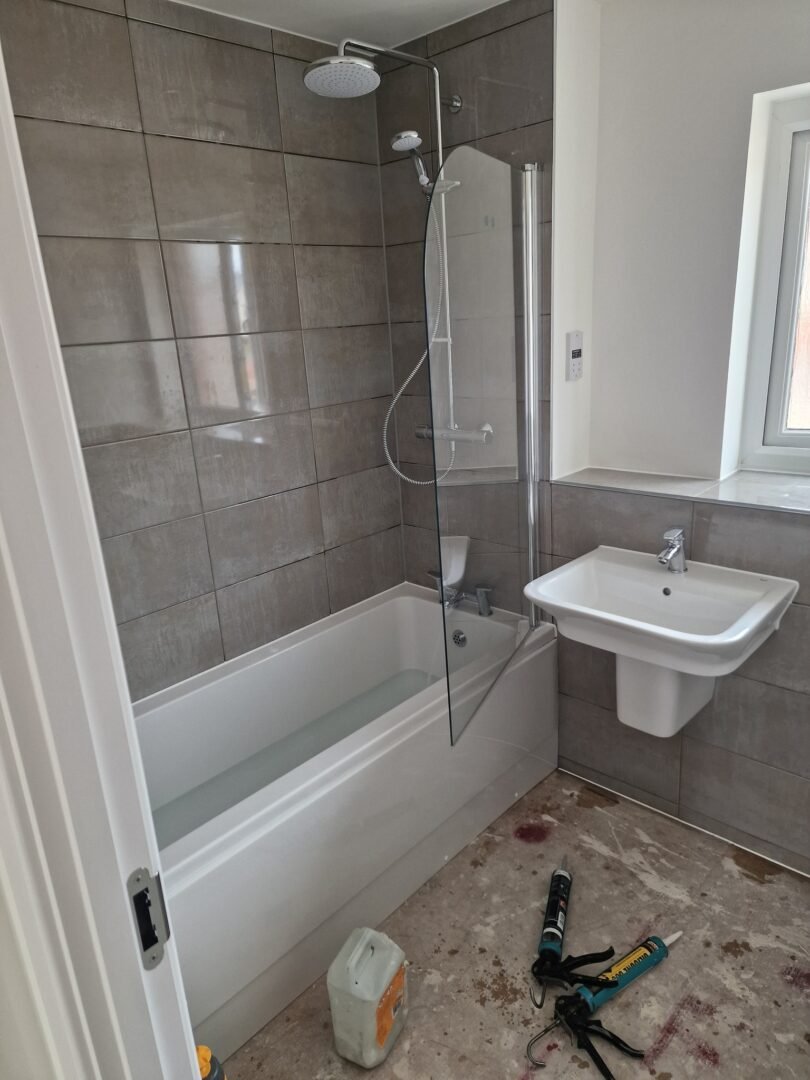
Bath and shower resealing
This is the job we’re asked about most. A straightforward bath reseal usually takes an hour or so of work, then the silicone needs time to cure before you use the bath.
Showers can take longer. A tray with an enclosure has more joints, and wet rooms need extra care because water runs right across the floor.
If your old silicone has gone black, expect the full strip-out to be part of the price. That’s not an upsell. Mould lives inside the silicone, so anything less just hides it for a few weeks.

Kitchen resealing
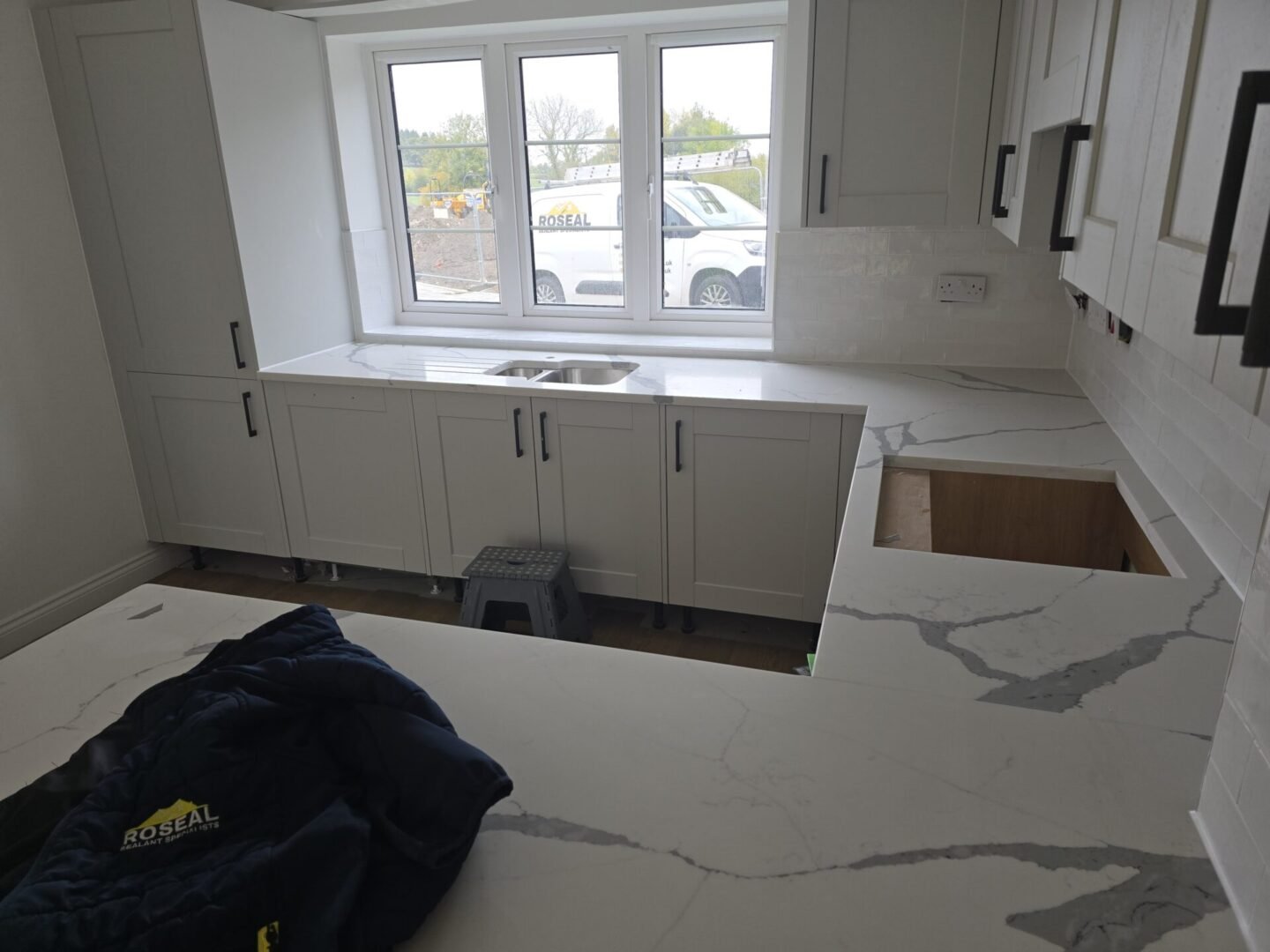
Kitchen worktops, sinks and splashbacks are usually priced per metre or as a fixed job. A small kitchen with one run of worktop is often similar in price to a bath. Long L-shaped runs or several upstands cost more.
Window and door mastic
External mastic around windows and doors is harder to price without seeing it. The number of windows, their size, the height of the property and the condition of the old mastic all matter.
Most specialists quote per window or per linear metre, and add access equipment for upper floors where needed. A survey, or even a set of clear photos, lets them give you a fixed price.

Commercial and new-build sealing
On commercial and new-build projects, sealant is almost always priced per linear metre or per package. Joint sizes, the product specification, fire or acoustic ratings and access all shape the price.
Fire-rated sealing in particular has to follow the manufacturer’s tested details, so it’s priced on the specification rather than the length alone.
If you’re a contractor, send drawings, a specification and the programme, and you’ll get a far more accurate quote.

DIY or professional?
Resealing a single bath yourself can cost as little as £20 to £50 in materials: a tube of sanitary silicone, a sealant gun, some remover and masking tape. If you’re patient and have a steady hand, it’s a reasonable DIY job.
Where professionals earn their money is in the preparation and the finish. Every trace of old silicone removed. A completely dry, clean joint. A smooth, even bead that doesn’t wobble halfway along. Done properly, a professional reseal typically lasts for years, not months.
Watch out for quotes that are too cheap
A very low price can be a warning sign. Be wary if a quote:
- doesn’t mention removing the old sealant
- doesn’t explain how the joint will be cleaned, treated and dried
- uses decorator’s caulk or general-purpose sealant in a wet area
- can’t tell you which product they’ll use, or why
- has no clear price, just “we’ll see when we get there”
Sealing over old silicone is quicker, and cheaper, and it usually starts peeling within weeks. Then you pay twice.
How to get an accurate quote
You’ll get a faster, more accurate price if you send:
- Clear photos of each joint, including close-ups of any mould or gaps
- Or a quick walk-through video on your phone. Thirty seconds showing the room often tells us more than a dozen photos
- Rough measurements, such as the length of the bath or worktop
- Access details, for example ground floor, first-floor flat or high-level windows
- When you’d like it done, especially for holiday lets between bookings
For larger or more complex jobs, we may suggest a visit. A minimum visit charge applies.
Want it done properly? We only do sealant. Every job gets full removal, proper preparation and professional-grade products. Send us a few photos or a quick walk-through video, and we’ll come back with a quote. Prefer a visit? We can do that too; a minimum visit charge applies.